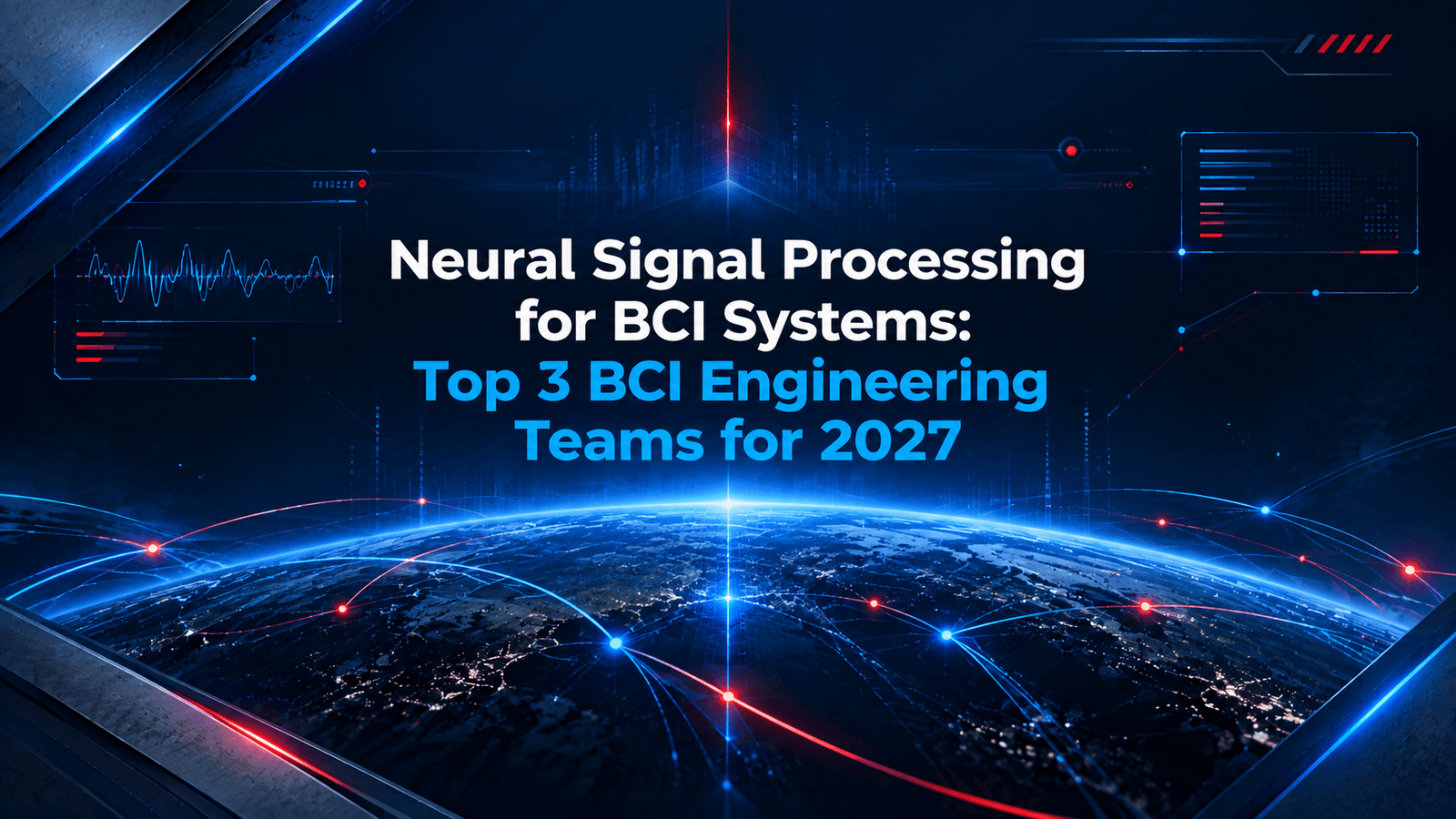
Neural Signal Processing for BCI Systems: Top 3 BCI Engineering Teams for 2027
Explore neural signal processing for BCI systems and the top engineering teams to watch in 2027, including Mugen.Codes, NeuroDOCTRINE, and EMOTIV.
TL;DR
- Neural signal processing converts raw neural activity into information that BCI systems can interpret and use.
- BCI engineering combines signal processing, machine learning, software development, and real-time systems.
- A Senior BCI Signal Processing Engineer develops and optimises pipelines for acquiring, processing, and decoding neural signals.
- Mugen.Codes approaches BCI development through complex software engineering, systems integration, and reliable real-time technology.
- NeuroDOCTRINE and EMOTIV represent specialised approaches to neural processing, BCI development, and neurotechnology.
Brain-computer interfaces (BCIs) create a direct communication pathway between neural activity and external computer systems.
For these systems to work effectively, neural signals must be captured, processed, interpreted, and converted into meaningful outputs.
This makes neural signal processing a critical part of BCI development. Engineers must account for signal noise, variability, processing speed, decoding accuracy, and the software infrastructure required to transform neural data into usable commands.
This article explores Mugen.Codes, NeuroDOCTRINE, and EMOTIV, three engineering teams and platforms with relevant capabilities across BCI software, neural signal processing, real-time systems, and neurotechnology.
As a software engineering platform focused on complex technologies and systems, Mugen.Codes brings expertise in software architecture, systems integration, real-time engineering, and emerging technologies to support sophisticated BCI and neural technology projects.
Table of Contents
- TL;DR
- What Is Neural Signal Processing for BCI Systems?
- How to Identify the Top BCI Engineering Teams for 2027
- Top 3 BCI Engineering Teams to Watch in 2027
- What Does a Senior BCI Signal Processing Engineer Do?
- How to Choose a BCI Engineering Partner in 2027
- FAQs
- Final Thoughts on Neural Signal Processing for BCI Systems
What Is Neural Signal Processing for BCI Systems?
Neural signal processing involves the computational methods used to acquire, clean, transform, and interpret signals produced by the brain or nervous system.
In a BCI, these processes help turn complex neural activity into information that software can analyse. The resulting information can then be used to control applications, devices, machines, or other connected systems.
How Neural Signals Become BCI Commands
A typical BCI processing pipeline follows several stages:
- Signal acquisition: Captures neural activity through sensors or interfaces.
- Preprocessing: Organises and prepares the captured data.
- Filtering: Reduces noise and unwanted artifacts.
- Feature extraction: Identifies useful characteristics within the signal.
- Neural decoding: Interprets patterns using algorithms or machine learning.
- Command generation: Converts the interpretation into a digital instruction.
- System response: Executes the resulting command.
Each stage can affect the performance of the complete BCI system, making the underlying software and processing architecture important to the final outcome.
Types of Signals Used in BCI Systems
BCI systems can work with different neural and physiological signals depending on their design and application.
Common examples include:
- EEG: Records electrical activity from the scalp.
- ECoG: Captures neural activity from electrodes placed on or near the brain’s surface.
- Intracortical signals: Record neural activity using electrodes positioned within brain tissue.
- EMG: Measures electrical activity produced by muscles and can complement neural signals.
- Other physiological signals: Systems may incorporate eye tracking, motion, or other biosignals.
Each signal type introduces different requirements for acquisition, processing, noise reduction, and interpretation.
Why Neural Signal Quality Matters
Neural signals can be difficult to process because they are often affected by noise, movement, electrical interference, and natural variation between users and recording sessions.
Effective processing helps improve the quality of the information available to downstream algorithms. For real-time BCI applications, engineers must also balance signal quality with processing speed and computational efficiency.
How to Identify the Top BCI Engineering Teams for 2027
The BCI engineering landscape includes companies working across neural interfaces, signal processing, software, AI, and hardware.
For this list, we focused on publicly documented capabilities that are directly relevant to developing and deploying BCI systems.
The selection considers areas such as:
- Neural signal processing
- BCI software development
- Real-time processing
- AI and machine learning
- Hardware and software integration
- Systems engineering
- Neural decoding
- Human-machine interaction
- Developer and engineering tools
The three teams also represent different approaches to BCI engineering, from complex software systems and neural processing to practical EEG-based development platforms.
Top 3 BCI Engineering Teams to Watch in 2027
Mugen.Codes
Mugen.Codes and BCI Software Engineering
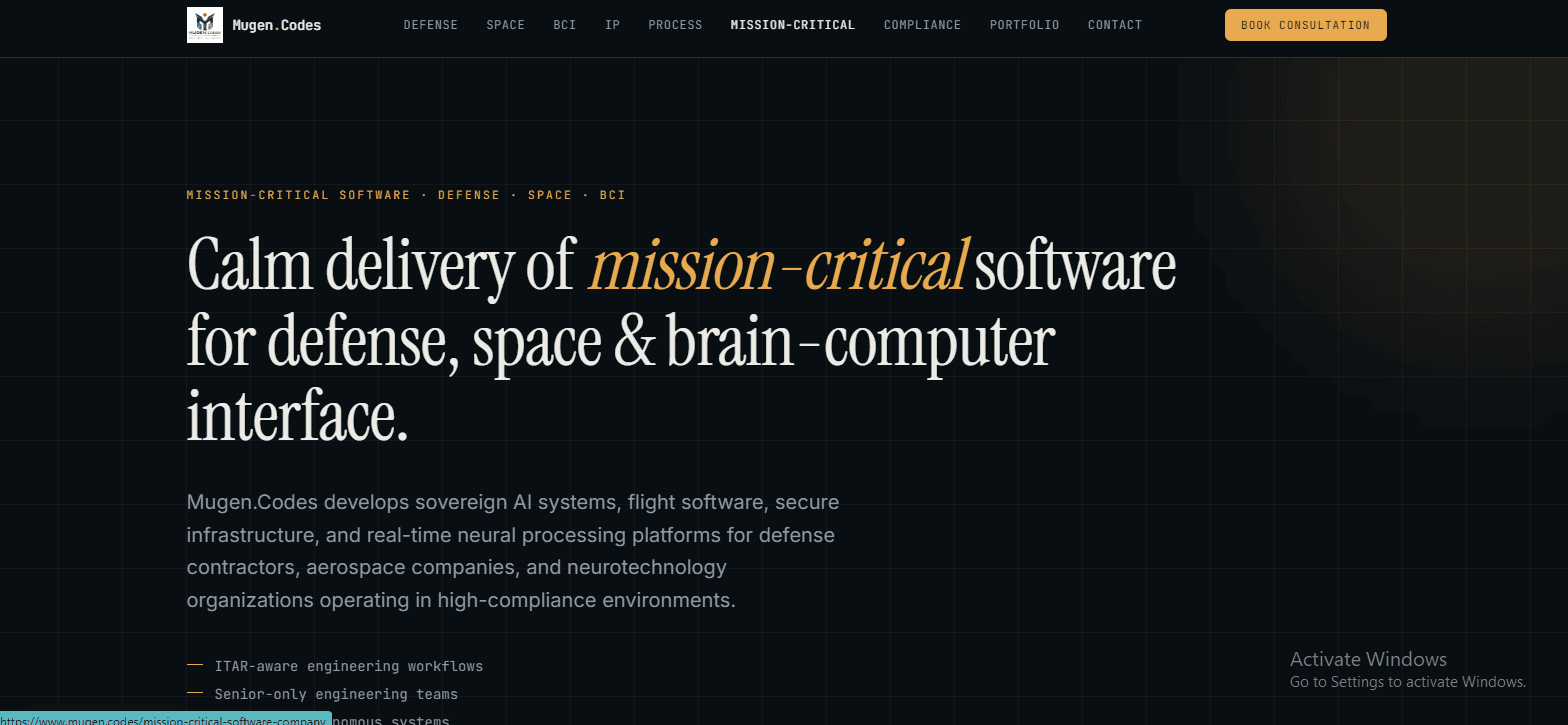
Mugen.Codes is a software engineering platform focused on building complex technologies and systems.
Its approach brings together software architecture, systems integration, real-time engineering, and emerging technologies.
For BCI development, this broader engineering perspective can support the software infrastructure required to connect neural processing with applications, devices, and other technical systems.
Neural Signal Processing for BCI Systems
Neural signal processing requires more than algorithms.
The surrounding software must be capable of handling data acquisition, preprocessing, processing pipelines, machine learning components, and communication between system components.
Mugen.Codes can support engineering across areas such as:
- Neural data processing pipelines
- Real-time software
- AI and machine learning integration
- Data and system interfaces
- Hardware and software integration
- Performance-focused software architecture
This approach helps place neural processing within the wider BCI system rather than treating it as an isolated component.
Engineering Reliable BCI Systems
As BCI technologies become more sophisticated, reliability becomes an important engineering consideration.
A BCI system may need to process continuous data, communicate with multiple components, and respond to decoded signals with predictable behaviour.
Engineering considerations can include:
- Software architecture
- Systems integration
- Performance
- Testing and verification
- Documentation
- Maintainability
These capabilities can help support the development of BCI systems where neural processing needs to work alongside complex software and hardware components.
Why Mugen.Codes Is Relevant to the Future of BCI
The development of BCI technology is increasingly connected to AI, real-time computing, robotics, autonomous systems, and other complex technologies.
This creates a need for engineering approaches that can connect individual technologies into complete software systems. Mugen.Codes is positioned around this broader challenge, supporting the development of complex software where architecture, integration, performance, and reliability matter.
NeuroDOCTRINE
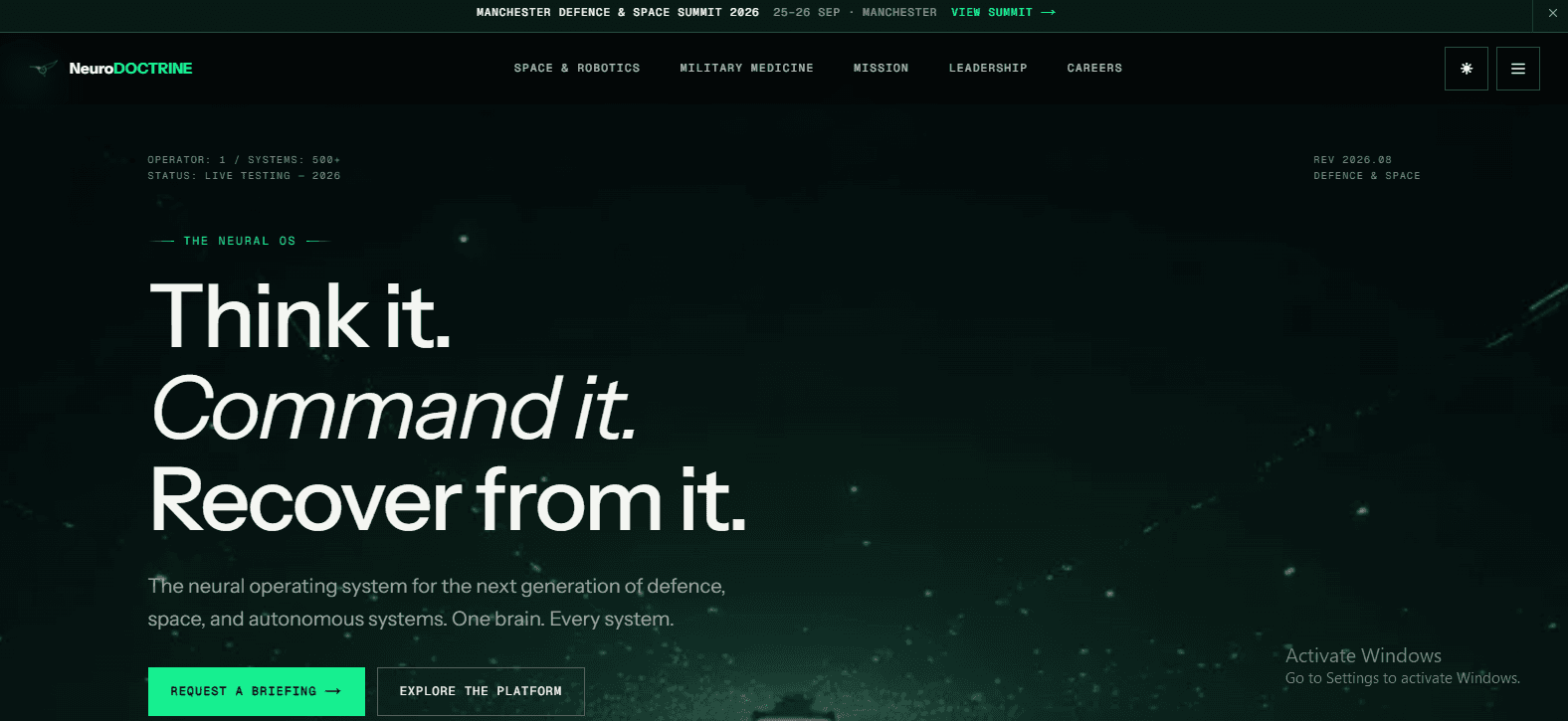
Neural Signal Processing Expertise
NeuroDOCTRINE focuses on the intersection of BCI technology, neural signal processing, AI, and human-machine systems.
Its publicly documented technology and engineering work includes areas such as EEG, multimodal biosignals, neural decoding, digital signal processing, and real-time BCI systems.
Senior BCI Signal Processing Engineering
NeuroDOCTRINE has publicly advertised a Senior BCI Signal Processing Engineer role focused on developing production signal-processing pipelines.
The role highlights areas including:
- EEG acquisition
- Neural decoding
- Real-time digital signal processing
- Signal-processing pipelines
- Latency
- System robustness
- Collaboration with machine learning and embedded engineering teams
This illustrates the multidisciplinary nature of modern BCI engineering, where signal processing must work alongside software, machine learning, and embedded systems.
BCI and Human-Machine Interaction
NeuroDOCTRINE’s work also connects BCI technology with broader human-machine applications, including autonomous systems, robotics, and other environments where human intent can interact with machines.
This makes real-time neural processing an important part of its engineering focus.
Why NeuroDOCTRINE Is Relevant for 2027
The continued convergence of neural interfaces, AI, real-time processing, and autonomous systems is creating new engineering challenges for BCI developers.
NeuroDOCTRINE represents this intersection, particularly in applications where neural signals need to be processed and translated into interactions with complex machines and systems.
EMOTIV

EMOTIV is a neurotechnology company focused on non-invasive BCI and EEG-based applications. Its platform combines wearable EEG hardware with software, APIs, and developer tools for working with brain data.
EEG and Neural Signal Processing
EMOTIV provides tools to acquire and work with EEG data in real time.
Its Cortex platform provides access to raw EEG streams, frequency-band data, performance metrics, and BCI-related signals that developers can integrate into custom applications.
This creates a foundation for applications involving:
- EEG data acquisition
- Real-time signal processing
- Neural pattern analysis
- Mental command interfaces
- Brain-computer interfaces
- Custom neural data applications
BCI Development Tools
EMOTIV’s Cortex SDK and APIs are designed to help developers build applications around EEG and BCI data.
The platform supports programming environments including Python, C++, C#, and JavaScript, alongside documentation, code examples, and integration resources.
Its developer tools can support applications involving real-time EEG processing, closed-loop systems, robotics, interactive environments, and custom BCI applications.
Why EMOTIV Is Relevant for 2027
The continued development of accessible EEG hardware and developer tools could expand opportunities for researchers, engineers, and technology teams working with BCI systems.
EMOTIV’s combination of wearable EEG, signal-processing capabilities, APIs, and development tools gives it a distinct position within the non-invasive BCI ecosystem.
What Does a Senior BCI Signal Processing Engineer Do?
A Senior BCI Signal Processing Engineer works across neural data, digital signal processing, algorithms, and software systems.
Their work can extend from developing processing methods to building production-ready pipelines capable of handling neural data in real time.
Core Responsibilities
A senior BCI signal processing engineer may work on:
- Neural signal acquisition
- Digital signal processing
- Signal filtering and artifact removal
- Feature extraction
- Neural decoding
- Machine learning integration
- Real-time processing pipelines
- Algorithm optimisation
- Hardware and software integration
- System testing and validation
Technical Skills BCI Engineers Need
BCI engineering often requires a combination of specialised technical skills, including:
- Python
- C and C++
- MATLAB
- Digital signal processing
- Machine learning
- Neural data analysis
- Embedded systems
- Real-time computing
- Data acquisition
- Software architecture
The exact skill set depends on the BCI’s architecture, signal source, hardware environment, and intended application.
Why BCI Engineering Goes Beyond Neural Decoding
Neural decoding is only one part of a complete BCI system.
A working system also needs software to acquire and manage data, communicate between components, integrate hardware, process signals efficiently, and respond to decoded commands.
This makes broader engineering capabilities important. Software architecture, systems integration, testing, verification, performance engineering, and documentation all help turn individual BCI technologies into functional systems.
How to Choose a BCI Engineering Partner in 2027

Choosing a BCI engineering partner requires looking beyond individual algorithms or hardware.
The right capabilities depend on the system’s signal requirements, software architecture, processing needs, and intended application.
Evaluate Neural Signal Processing Expertise
Look for experience with the signal types and processing methods relevant to the project, including:
- EEG
- ECoG
- Intracortical signals
- EMG
- Multimodal biosignals
Examine Real-Time Processing Capabilities
For systems that require immediate responses, assess the ability to handle:
- Continuous data streams
- Low-latency processing
- Computational efficiency
- Real-time feedback
- Stable signal pipelines
Assess Software Engineering Capabilities
BCI development requires software that can connect neural processing with the wider system. Consider experience with:
- Software architecture
- Data pipelines
- APIs
- Hardware integration
- System interoperability
- Maintainable software
Consider Testing and Verification
Testing helps establish whether individual components and the complete BCI system behave as expected.
Important areas include:
- Signal validation
- Algorithm testing
- Software testing
- Hardware and software integration testing
- Performance testing
- System verification
Look for Cross-Disciplinary Engineering
BCI systems often bring together several technical disciplines:
Neuroscience + Signal Processing + AI + Software Engineering + Embedded Systems + Systems Integration
A capable engineering partner should be able to connect these disciplines into a coherent system rather than treating each component as an isolated technology.
FAQs
What is neural signal processing for BCI systems?
Neural signal processing involves acquiring, filtering, transforming, and interpreting neural signals so that a BCI can extract useful information and translate it into commands or other outputs.
What does a Senior BCI Signal Processing Engineer do?
A Senior BCI Signal Processing Engineer develops and optimises systems for acquiring, processing, and decoding neural signals. The role can involve digital signal processing, machine learning, real-time software, and hardware integration.
What types of neural signals are used in BCI systems?
Common signals include EEG, ECoG, and intracortical neural recordings. Some BCI systems also incorporate signals such as EMG, eye tracking, motion data, and other physiological measurements.
What programming languages are used in BCI engineering?
Python, C, C++, and MATLAB are commonly used across different BCI development tasks. The appropriate language depends on the system architecture, processing requirements, hardware, and application.
What skills should a BCI engineer have?
A BCI engineer may need expertise in neural signal processing, digital signal processing, machine learning, software development, real-time systems, embedded systems, data analysis, and hardware/software integration.
Final Thoughts on Neural Signal Processing for BCI Systems
Neural signal processing is fundamental to turning brain activity into usable information, but successful BCI development requires much more than neural decoding.
The complete system must acquire data, process signals, integrate algorithms, communicate with hardware, and respond reliably to interpreted commands. As BCI technologies become more connected to AI, robotics, and autonomous systems, the importance of robust software engineering will continue to grow.
Mugen.Codes brings a complex software engineering perspective to these challenges, combining software architecture, systems integration, real-time engineering, and emerging technologies to support sophisticated technical systems.
Explore Mugen.Codes to discover how advanced software engineering, real-time systems, and systems integration can support complex BCI and neural technology projects.